
Mastering Clean Backlinks: Practical Steps to Remove Spammy Links and Protect Your Site (updated for 2026)
This guide is designed for website owners, SEO professionals, and digital marketers looking to maintain a healthy backlink profile. Clean backlinks are inbound links from reputable, relevant, and trustworthy websites that are earned naturally rather than through manipulative tactics. High-quality backlinks boost your site’s authority; spammy or toxic links do the opposite. Failing to address toxic backlinks can result in a google penalty, which can severely impact your site’s search rankings. This guide walks you through a sensible cleanup process — from spotting bad links and reaching out for removals to using the Google Disavow Tool when necessary — so you can safeguard organic visibility and avoid manual or algorithmic penalties.
Regular seo tasks such as backlink audits and monitoring are essential for maintaining a high quality backlink profile. Inside you’ll find step-by-step workflows, decision matrices, sample disavow formats, monitoring checklists, and prevention tactics tailored to today’s search landscape. Read on for practical, repeatable procedures to audit, remediate, recover, and defend your domain. Achieving seo success depends on ongoing backlink management and maintaining a clean, authoritative link profile.
What Are Toxic Backlinks and Why Should You Remove Them?
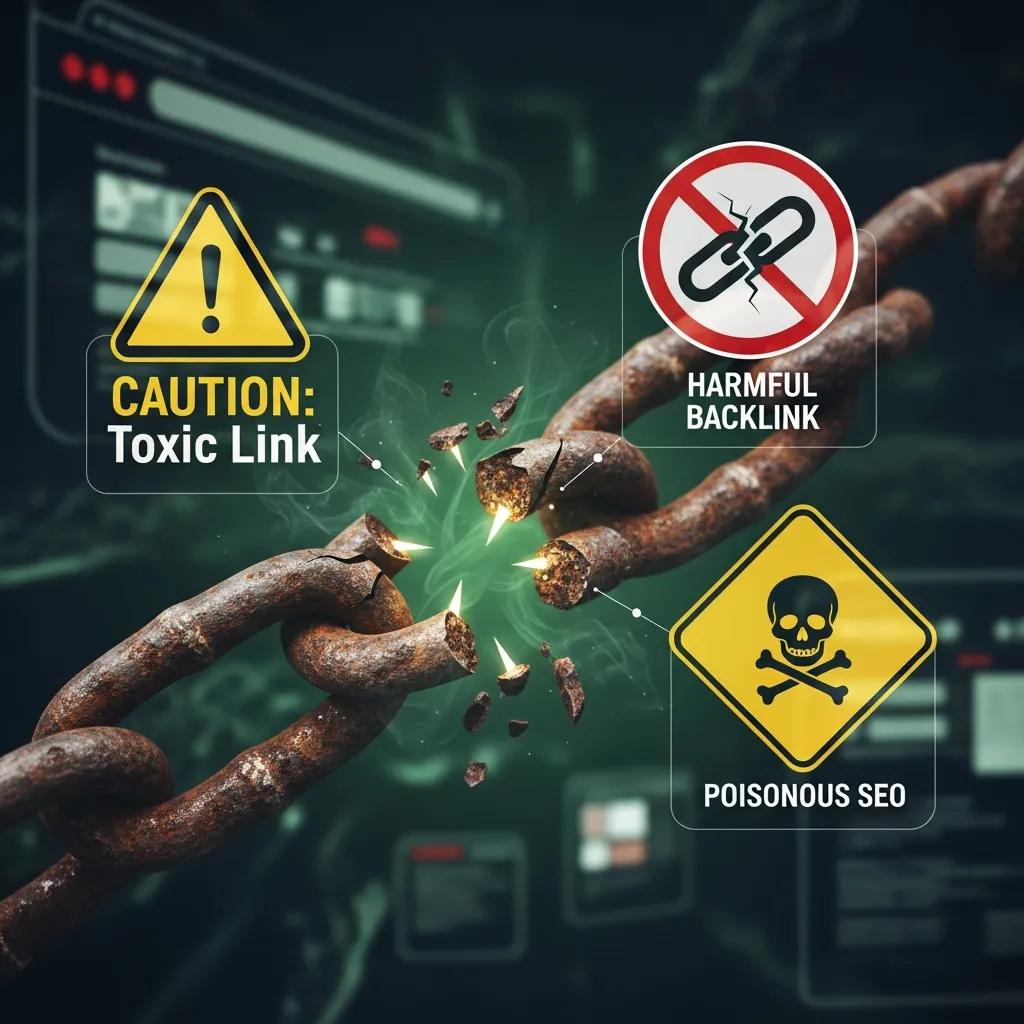
Toxic backlinks come from low-quality or manipulative pages and networks that erode your site’s credibility with search engines. Bad backlinks and low quality backlinks reduce overall backlink quality and can trigger penalties from search engines. They send misleading relevance signals, rely on keyword-stuffed anchors, or belong to link schemes — all of which can trigger algorithmic downranking or manual action. Link spam and duplicate content are common features of sites that generate toxic backlinks. Cleaning or neutralizing those links restores a truer link profile, improves how search engines interpret your authority, and lowers the risk of ongoing negative SEO. Below we unpack how toxic links damage ranking signals and where they usually show up so you can spot and prioritize cleanup effectively. Toxic backlinks often violate Google’s link spam guidelines because they are placed for SEO purposes rather than for user benefit.
How Do Toxic and Spammy Links Harm Your Website?
Spammy links distort anchor-text balance, create suspicious link patterns, and flag your profile as manipulated. Toxic links can lead to a google penalty, causing your site to drop in search engine results pages. Search algorithms can devalue those incoming links, and human reviewers may apply manual penalties that reduce visibility. For example, a sudden flood of low-quality links using exact-match anchors often looks like negative SEO or past paid-link activity and can cause sustained traffic drops until you remediate. A sudden drop in backlinks or rankings can signal to Google that your website’s seo performance has been compromised. Understanding these mechanisms helps you decide when to do outreach and when to disavow during a cleanup. Low-quality backlinks contribute little or nothing to SEO efforts and may negatively affect a website’s rankings.
What Are Common Sources of Spammy Backlinks?
Most spammy links originate from private blog networks (PBNs), comment or forum spam, low-quality directories, directory listings (especially those that are low-quality or non-reputable), hacked sites, and automated link-exchange schemes. Typical red flags include high spam scores, irrelevant topical mismatch, thin or autogenerated content on the linking page, and identical anchor text across many low-authority domains.
It’s important to assess backlinks from other sites and websites linking to you, especially if they are unrelated to your niche or local audience. Potentially toxic links from irrelevant sources or such links from unrelated regions may not benefit your local audience and should be prioritized for review. Spotting these patterns in your backlink reports lets you triage quickly — focus on high-risk domains first and protect valuable, relevant links.
How to Conduct a Comprehensive Backlink Audit: Step-by-Step Guide

An effective backlink audit pulls data from multiple sources, removes duplicates, enriches each record with metrics, and classifies links into action buckets: keep, outreach, or disavow. Using a toxic backlink checker or toxic link checker can help you quickly identify harmful links and save time during the audit process. Start by exporting raw reports, add domain metrics (authority, spam score), and evaluate contextual signals like link placement and topical fit. The best audits pair automated thresholds with manual checks for edge cases and log every decision for traceability. Follow this clear workflow to run a repeatable audit.
-
Export backlink data from Search Console and any third‑party crawlers you use.
-
Normalize and deduplicate exports, then append metrics such as domain rating, spam score, estimated organic traffic, total links, and domain score for each referring domain to assess risk.
-
Rank links by risk and manually inspect high-risk entries for context and anchor-text patterns.
-
Reach out to request removals for questionable links; prepare a disavow file for any links you cannot get removed. Link removals and backlink removal are key seo tasks during the audit process.
That checklist gives you an orderly sequence to track progress and keep decisions consistent across large backlink sets. Next we explain which tools help at each step and when to use them.
Conducting a backlink audit is easy and can be implemented in just a few clicks if you use paid tools like SEMrush, Ahrefs, or Moz Link Explorer. You can also use tools like Google Search Console, SEMrush, and Ahrefs to help you identify poor backlinks, conduct audits, and gain detailed insights into your backlink profile.
Introductory explanation: Use the quick decision matrix below to classify backlinks during an audit and map each class to an action. It standardizes triage when you’re working with long backlink lists.
|
Link Type / Source |
Metric Snapshot (DA/DR, Spam Score, Anchor Text) |
Recommended Action |
|---|---|---|
|
High‑Authority, Relevant |
High DA/DR, Low Spam Score, Relevant Anchor |
Keep and monitor |
|
Low‑Authority, Spammy Anchor |
Low DA/DR, High Spam Score, Keyword‑stuffed Anchor |
Outreach for removal |
|
Suspicious Networks / PBN |
Mixed metrics, patterned linkage, shared IP ranges |
Disavow if outreach fails |
This matrix pairs clear attributes with concrete actions — keep, outreach, or disavow — so you can prioritize remediation and document why each link was classified that way.
Your choice of tools affects coverage and granularity; the next section breaks down the practical uses for each option.
Which Tools Are Best for Backlink Audits?
Combine Search Console for official linking data and manual-action notices with third‑party crawlers for broader historical coverage and spam scoring. Third‑party tools give bulk exports and metrics; Search Console gives the canonical view. Google Analytics can be integrated with Google Search Console and other SEO tools like Majestic to obtain more comprehensive and accurate backlink and site health reports, enhancing the analysis of toxic backlinks and overall SEO performance. Spreadsheets remain indispensable for normalization, deduplication, and collaborative review because they let teams add notes, decision flags, and outreach status. When selecting tools, balance cost, data freshness, spam-scoring features, and API access to support a repeatable audit workflow.
Several leading tools can help you audit and clean backlinks effectively. Semrush’s Backlink Audit tool evaluates your backlink profile’s health with a Toxicity Score metric. Moz’s Open Site Explorer is a free tool that helps users assess their backlink profile. Ahrefs provides a Site Explorer tool that allows users to audit their backlink profile and identify suspicious links. WebCEO offers a powerful spam link checker integrated with Majestic, providing access to a large link index database. LinkResearchTools provides excellent value for money when it comes to cleaning up bad backlinks.
Those tool choices feed directly into the signals and thresholds you’ll use to mark links as toxic or questionable, which we cover next.
How to Identify Spammy and Low-Quality Links During an Audit
Flag spammy links by checking domain authority/rating, spam score, anchor-text repetition, topical relevance, and on‑page placement; use explicit thresholds to limit subjectivity. Practical rules: flag domains with very low authority and high spam scores, links placed in widgets or footers, and pages with thin or auto‑generated content. During manual inspection, also check for nofollow links and analyze link text (anchor text) for signs of over-optimization or unnatural patterns. Cross‑check anchor-text patterns for over‑optimization and language mismatches, and open sample pages in a browser to confirm context. Be sure to obtain contact details for referring domains to facilitate outreach if removal is needed. These rules form a defensible cleanup process and guide your choice between top seo mistakes and disavow. You can craft an effective email requesting the website owner to remove the backlink and ask politely to increase the chances of approval.
How to Use the Google Disavow Tool to Remove Spammy Links Safely
The Google Disavow Tool in Google Search Console allows you to disavow toxic backlinks by submitting a disavow file, which tells Google to ignore specific domains or URLs when evaluating your site. To disavow harmful backlinks, you need to create a disavow file listing all the URLs or domains you want to include and submit the file through Google Search Console. After identifying a toxic backlink, you should contact the referring domain to request removal or the addition of the appropriate attribute before submitting the disavow file. You upload a plain‑text disavow file with domain or URL entries in the required syntax; Google then considers those entries when processing ranking signals. Disavow isn’t a magic restore button, but it prevents known bad links from continuing to hurt your profile. Reserve it for large-scale spam, failed outreach, or when a manual action cites unnatural links; avoid blanket domain disavows without review. The sections below outline decision criteria and the correct file formatting and submission steps.
When Should You Use the Google Disavow Tool?
Use the disavow tool when you face many clearly toxic links you cannot remove, when a manual action references unnatural links, or when ongoing negative SEO is evident. Consider scale (many low‑quality links across many domains), inability to contact site owners, and the presence of manual actions as triggers. Don’t use disavow for a handful of marginal links — unnecessary disavows can strip useful link equity. Adopt a staged approach: outreach first, disavow only unresolved toxic domains.
That decision framework leads into the exact formatting and upload steps for a safe disavow file.
What Is the Correct Process for Submitting a Disavow File?
Create a plain‑text () file in UTF‑8 or 7‑bit ASCII, with one entry per line: use for domain‑level disavows or the full URL for specific pages. Comment lines starting with are fine for internal notes. Example entries include and specific URLs for isolated bad pages; avoid adding prose — Google expects only entries and comments. After you verify entries, upload the disavow file to the verified property following Google’s interface and monitor performance — changes can take several weeks to show. Correct formatting avoids parsing mistakes and helps ensure you disavow only what you intend.
Reference: common disavow entry types and safe examples are below.
|
Disavow Entry Type |
Syntax / When to Use |
Example Entry |
|---|---|---|
|
Domain-level entry |
Use for entire domains causing spam |
domain:spamdomain.com |
|
URL-level entry |
Use for isolated bad pages on otherwise clean domains |
http://spamdomain.com/badpage.html |
|
Comment lines |
For human notes, ignored by parser |
# Disavow list compiled 12/2023 |
These examples reduce the risk of malformed files and help you prepare a precise submission. After upload, keep monitoring to confirm the cleanup’s effect.
What Are the Best Practices for Spammy Link Cleanup and Negative SEOPrevention?
Build repeatable cleanup processes: keep a single source of truth for backlink records, log outreach attempts, use consistent scoring thresholds, and schedule regular audits to catch regressions. Prevention emphasizes monitoring, a rapid‑response plan for suspicious link spikes, and conservative link acquisition that favors topical relevance and editorial placement. A practical workflow pairs automated alerts with monthly manual reviews and a clear incident‑response plan to handle negative SEO attempts. A negative SEO attack can involve competitors building spammy links to your site to trigger a penalty.
As part of your ongoing SEO efforts, it’s crucial to perform regular link detox to identify and remove low-quality backlinks, ensuring a healthy backlink profile. Effective link building strategies should focus on acquiring high-quality links that pass SEO value and link juice, while avoiding link spam that could harm your rankings. The sections below cover monitoring cadence and strategies to reduce repeat attacks.
Negative SEO involves competitors building spammy links to a website with the intention of triggering a penalty.
How Can You Monitor Your Backlink Profile Regularly?
Combine weekly automated alerts for large spikes with monthly manual reviews that sample new and lost links for context and anchor-text changes. Track KPIs like referring domains, top toxic domains, anchor-text diversity, and organic traffic trends to link cleanup actions with ranking movements. Use spreadsheet logs to record outreach outcomes, dates, and decisions so you build an audit trail that supports future disavow choices and manual-action appeals. Regular monitoring helps you catch negative trends early, identify and prioritize link removals, and act before algorithmic damage accumulates.
These monitoring habits tie directly into defensive strategies for preventing negative SEO, covered next.
What Strategies Help Prevent Negative SEO Attacks?
Key defenses include keeping an up‑to‑date disavow file, documenting removal outreach to demonstrate due diligence during appeals, and preparing quick‑response templates for outreach and security reporting when links come from hacked sites. Regularly monitor your backlink profile for spam links, and promptly remove or disavow any spam links to protect your site from negative SEO attacks and potential Google penalties. Archive snapshots of linking pages and retain communication logs to support dispute resolution or reinstatement requests. Also adopt a cautious link acquisition policy that prioritizes earned editorial links and varied anchor text to reduce exposure to manipulative patterns. These measures shrink the attack surface and make remediation faster when suspicious activity appears.
This research offers a structured way to understand and categorize common negative SEO tactics.
Contact Reinhardt DesignsCITATION: Negative SEO Attacks: Risk Assessment and Categorization
This paper defines negative SEO and groups common attack types, then introduces a risk assessment framework for evaluating threats. A risk assessment method for negative SEO attacks using a game theoretic approach, T Lynn, 2015
How to Recover and Maintain a Healthy Backlink Profile After Cleanup?
Recovery focuses on restoring trust signals through clean link building, content improvements, and steady monitoring. Cleaning up your backlink profile can lead to improvements in Google rankings and greater visibility in search results. Clean tactics include resource pages, relevant guest contributions, PR-driven earned coverage, and linkable assets that attract natural citations. Ongoing monitoring and clean link building are essential for maintaining strong SEO performance and your website’s SEO performance. Each method has a different risk profile and timeline — match your approach to business goals and capacity for quality control. Below is a comparison of common clean link-building tactics, their risk, and expected time to impact.
Link-building techniques comparison: Use this table to choose tactics that balance safety and speed during recovery.
|
Link Building Technique |
Risk Level / Time to See Results |
Best Practices & Expected Outcomes |
|---|---|---|
|
Earned PR / Media |
Low risk / 1-3 months |
Create newsworthy assets and pitch relevant journalists for authoritative citations |
|
Guest contributions |
Low-moderate risk / 2-4 months |
Target niche sites with editorial standards and natural anchor text |
|
Resource & outreach links |
Low risk / 3-6 months |
Build high-quality resources and request inclusion on curated lists |
|
Partnerships & mentions |
Low-moderate risk / 2-5 months |
Co-create content with partners and seek reciprocal mentions where appropriate |
This comparison helps prioritize safe tactics that rebuild authority without inviting repeat spam signals. If you prefer hands-off support, the next paragraph explains optional professional assistance.
Optional professional assistance: Once you complete audit and cleanup steps, our resource hub can provide audit support, templates, and consultation to implement recovery plans and ongoing backlink monitoring. Hiring help speeds clean link building and manages outreach and disavow preparation for you. If you need to stay focused on core operations, outsourcing recovery work preserves monitoring continuity and keeps documentation ready for appeals. These services are optional but useful for teams that want technical support or packaged workflows.
Achieving SEO success depends on maintaining a healthy backlink profile and adapting your strategy as search algorithms evolve.
What Are Effective Link Building Techniques for Clean Backlinks?
Effective clean link building prioritizes topical relevance and editorial context: write guest posts with original research or practical insights, build cornerstone resources that attract citations, and run PR outreach to secure industry coverage. A high quality backlink profile is built through ethical link building strategies that prioritize relevance and editorial standards. Personalize outreach, nurture relationships, and keep anchor text descriptive and varied to avoid over‑optimization. Scale safely by logging outreach outcomes, checking placement quality, and favoring links from domains with shared topical relevance and audience overlap. For local SEO, acquiring backlinks from geographically relevant sources is crucial to improve local search visibility and target the right audience. These practices speed recovery while staying within search engine quality guidelines.
Understanding the range of SEO methods helps you choose ethical, effective strategies.
CITATION: Search Engine Optimization in E-commerce: A Balanced Approach to White Hat and Black Hat Methodologies
Section II outlines search engine marketing and the advantages of SEO over PPC; later sections contrast ethical and non‑ethical SEO practices to clarify risks and trade‑offs. SEO in e-commerce: balancing between white and black hat methods, M Čarapina, 2013
How to Track Improvements in Search Rankings Post-Cleanup?
Measure recovery with KPIs like organic sessions, ranking positions for priority keywords, the count of quality referring domains, and reductions in toxic-link totals. Tracking the flow of link juice and SEO value from your total links helps you measure the effectiveness of your cleanup efforts. Set a reporting cadence — monthly for high‑level results and weekly for alerts — and keep before‑and‑after snapshots of backlink reports to show the impact of outreach and disavow actions. Where possible, run controlled tests (for example, staggered outreach or content updates) to isolate variables that affect rankings. Good tracking and documentation guide further remediation or investment in clean link acquisition.
What Are the Common Mistakes to Avoid When Removing Spammy Links?
Typical cleanup mistakes include overusing the disavow tool, accidentally removing valuable links, failing to document decisions, and not checking the linking page’s context before acting. These missteps can drain link equity, weaken topical relevance, and make reversals difficult. Build safeguards into your process — peer review flagged links, use conservative disavow thresholds, and document every decision — to reduce the chance of harming good links. When evaluating your backlink profile, pay special attention to nofollow links and link text; carefully assess such links to avoid removing nofollow links or anchor text patterns that may not be harmful and could contribute to a natural backlink profile. The sections below explain why overuse is harmful and how to avoid removing helpful backlinks by mistake.
Contact Reinhardt DesignsWhy Is Overusing the Disavow Tool Risky?
Overuse is risky because disavowing legitimate links strips their authority contributions, which can lower rankings and slow recovery. Treat disavow as a last resort after reasonable removal efforts and manual review; blanket disavows increase the chance of discarding useful links. Safer options include targeted outreach, improving the linked content to increase relevancy, or monitoring questionable links while you gather more evidence. Peer reviews and verification steps before adding entries prevent irreversible errors and help preserve natural link equity.
How to Avoid Removing Valuable Backlinks by Mistake?
Prevent accidental removals with a verification checklist that checks domain authority, topical relevance, traffic estimates, anchor-text context, and on‑page placement before you outreach or disavow. Use archived snapshots or cached pages to verify historical context and consult a colleague for borderline cases. Record each decision with reasons and evidence so you can reverse or explain actions later. An evidence-based, reversible process protects good links while allowing decisive action against truly toxic backlinks.
-
Document decisions: Keep a record of why each link was kept, outreached, or disavowed.
-
Peer-review borderline links: Have at least one other reviewer confirm the classification before disavowing.
-
Use snapshots for context: Archive linking pages to verify placement and content when decisions are made.
These safeguards reduce accidental loss of quality links and create a defensible cleanup history. If you need help compiling exports, preparing disavow files, or running ongoing monitoring, our resource hub offers templates and consulting to streamline those tasks.
Frequently Asked Questions
What are the long-term effects of not removing toxic backlinks?
Leaving toxic backlinks in place can cause ongoing downward pressure on rankings and organic traffic. Over time, algorithmic devaluation or manual penalties may reduce visibility and make recovery harder. A persistently poor backlink profile can also limit your ability to earn quality links, since search engines may continue to view the site as less trustworthy.
How often should I conduct a backlink audit?
Quarterly audits are a solid baseline for most sites. If you see sudden traffic drops or suspect negative SEO, run an immediate audit. Regular audits help you catch toxic links early and adapt your link‑building strategy as your profile changes.
Can I recover from a manual penalty due to toxic backlinks?
Yes — recovery is possible but it takes a methodical approach. Identify and remove or disavow harmful links, document your removal efforts, and then submit a reconsideration request to Google that details the steps you took. Clear documentation of outreach and remediation is essential for a successful appeal.
What role does content quality play in backlink effectiveness?
Content quality is central. High‑value, relevant content attracts natural backlinks from authoritative sites and strengthens credibility. Low‑quality content can attract low‑value or spammy links, which hurt your reputation. Focus on useful, well‑crafted content to earn sustainable links and trust.
How can I identify if a backlink is toxic?
Evaluate domain authority, spam score, topical relevance, and anchor text. Look for links from low‑authority domains, pages with thin or spun content, or repeated exact‑match anchors across many domains. Backlink tools speed this process by surfacing risk signals, but always spot‑check pages in a browser to confirm context.
What should I do if I can’t contact the webmaster to remove a toxic link?
If outreach fails, use the Google Disavow Tool — but only after you’ve documented reasonable removal attempts. Disavow lets you tell Google to ignore specific domains or URLs when assessing your site. Keep records of outreach to support future appeals if needed.
Contact Reinhardt DesignsConclusion
Keeping a clean backlink profile protects your site’s authority and search visibility. By identifying and neutralizing toxic links, documenting your work, and rebuilding authority with clean link-building tactics, you reduce penalty risk and restore trust in your domain. Start with a repeatable audit, follow a staged removal process, and use monitoring to keep your profile healthy long term — and reach out if you want help putting these steps into practice.